The Cayman Islands are famous for their crystal-clear water, vibrant coral reefs, and incredible marine life. It’s easy to see why so many visitors fall in love with the place we call home, especially divers. That’s why plenty of first-timers become return visitors.
But whether you’re planning your first Grand Cayman dive package or you’ve become a regular guest on our island, we cannot overstate the importance of protecting our stunning natural attractions. And this is a shared responsibility. Fortunately, eco travel in Grand Cayman doesn’t mean missing out on memorable experiences. A few thoughtful choices can help preserve our island’s reefs, beaches, and wildlife while ensuring future visitors can enjoy them too.
This guide explores simple ways to travel more responsibly, both above and below the water, and explains how every diver and snorkeler can play a part in Grand Cayman reef conservation.

Why Protecting Grand Cayman’s Marine Environment Matters
Grand Cayman’s reefs are among our island’s greatest natural treasures. They provide habitat for countless marine species, help protect the coastline from erosion, and support the local tourism industry that so many businesses and communities rely on.
For divers, healthy reefs mean colorful coral formations, thriving fish populations, and unforgettable underwater experiences. That’s why sustainable tourism in Grand Cayman is about more than protecting nature; it’s about preserving the very experiences visitors come here to enjoy.
If you’re planning your first reef dives here, our Guide to Coral Reef Diving in Grand Cayman explains what makes these underwater ecosystems special and why it’s so important that we all protect them.

Dive Responsibly in Grand Cayman from the Start
Practicing responsible diving in Grand Cayman begins long before you enter the water. Good buoyancy, proper equipment setup, and awareness of your surroundings all help reduce your impact on the reef.
Once underwater, avoid touching coral, even if it appears to be rock. Coral is a living animal that can be damaged by even brief contact. Keeping good control of your fins and securing gauges and hoses will also help prevent accidental contact with delicate reef structures. It’s important to note that divers are strictly prohibited from wearing gloves here in the Cayman Islands, under local marine conservation regulations.
Divers must always observe marine life respectfully. Sea turtles, stingrays, reef fish, and sharks are best enjoyed from a comfortable distance without chasing or attempting to touch them. Feeding wildlife can alter natural behaviors and should always be avoided.
If you’re looking to improve your buoyancy before you arrive, our Guide to Correctly Weighing Yourself for Neutral Buoyancy offers practical advice that benefits both divers and the reef.

Protect Grand Cayman’s Reefs Before You Even Enter the Water
One of the simplest ways to support Grand Cayman reef conservation starts before your dive or beach day even begins. Choosing a reef-friendly sunscreen helps reduce the number of potentially harmful chemicals entering the sea.
While you’ll often hear the terms “reef-friendly” and “reef-safe” used interchangeably, understanding the difference can help you make more informed choices. Our companion guide, Reef-Friendly vs. Reef-Safe Sunscreen: Protect Your Skin and Grand Cayman’s Coral Reefs, explains what to look for when choosing sun protection.
You can also read our guide to the importance of reef-safe sunscreen for more information about why your sunscreen choice matters.
Beyond sunscreen, simple habits such as carrying a reusable water bottle, refusing unnecessary single-use plastics, and wearing UV-protective clothing can help reduce waste while spending long days outdoors.
If you need to stock up before your dives, Sunset House’s retail shop carries Stream2Sea sunscreen, a brand developed with both outdoor enthusiasts and marine environments in mind.
Respect Grand Cayman Wildlife During Every Encounter
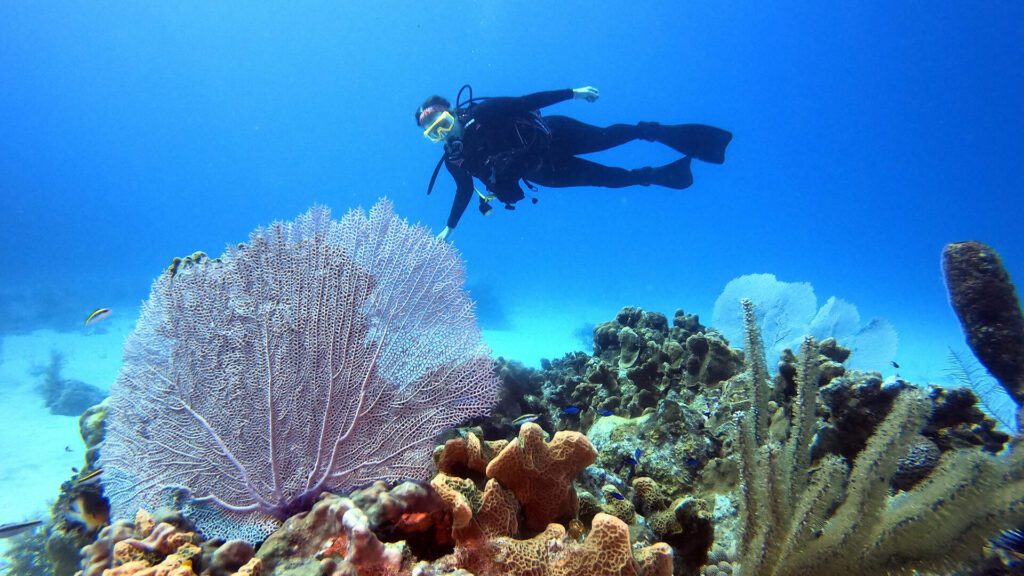
One of the highlights of visiting Grand Cayman is the opportunity to encounter wildlife in its natural habitat. Sea turtles, southern stingrays, reef sharks, nurse sharks, colorful tropical fish, and countless smaller reef creatures can all be seen throughout our island’s waters. Whether you’re diving, snorkeling, or simply exploring the shoreline, the best approach is always to observe without interfering.
Give animals plenty of space, avoid blocking their path, and never attempt to feed or handle them. Even seemingly harmless actions can cause unnecessary stress or change natural behavior.
If you’re hoping to learn more about the species you may encounter, take a look at our guides to 10 Aquatic Animals You Will Encounter in Grand Cayman and 5 Wildlife Encounters in Grand Cayman before your trip.

Explore Grand Cayman Responsibly Above the Water
Sustainable travel in Grand Cayman doesn’t stop when your dive ends. You can enjoy many of our most popular attractions while helping preserve our island’s natural beauty. For example, when visiting nature reserves, stay on marked paths, dispose of litter responsibly, and support locally owned businesses wherever possible.
When spending time at beaches such as Smith Barcadere or Seven Mile Beach, take everything you bring with you and don’t remove shells, coral fragments, or other natural souvenirs. They all play a role in the coastal ecosystem.
If you’re visiting attractions such as the Queen Elizabeth II Botanic Park or the Cayman Crystal Caves, follow local guidance and respect protected habitats. Responsible tourism helps ensure these special places remain enjoyable for years to come.

Why Sunset House is a Great Choice for Eco-Conscious Divers
At Sunset House, we have welcomed divers to Grand Cayman for generations. Our location makes it easy to experience some of our island’s best underwater attractions while following responsible diving practices.
Sunset Reef, located directly offshore, offers one of the Caribbean’s best shore diving experiences. Being able to enter the water just steps from your room means many dives can begin without travelling by boat, while still providing access to healthy coral reefs, abundant marine life, and the famous Amphitrite Mermaid statue.
For those looking to explore further, Sunset Divers also offers guided boat trips to some of Grand Cayman’s best dive sites, including a Kittiwake Wreck Dive, where experienced local professionals encourage safe and respectful diving practices.
Whether you’re joining a shore dive, a boat trip, or a snorkeling excursion, you’ll find plenty of opportunities to experience Grand Cayman’s underwater world responsibly.

Every Small Choice Helps Protect Grand Cayman
Responsible travel isn’t about being perfect. It’s about making thoughtful choices that help preserve the places we love to visit. When we all do our part, Grand Cayman’s reefs, beaches, and marine life will continue to inspire divers and snorkelers for generations to come.
If you’re planning your next Caribbean dive vacation, Sunset House offers the perfect base to explore Grand Cayman responsibly. From shore diving on Sunset Reef to guided boat trips and PADI courses, you’ll discover why so many divers return to experience our remarkable island while helping protect it.
Browse our full range of Grand Cayman dives for more inspiration, and please don’t hesitate to get in touch if you have any questions.