Grand Cayman is the kind of place that makes you want to keep your camera close at all times. Above the surface, there are stunning white-sand beaches, ironshore coastlines, and glowing Caribbean sunsets. Beneath the water, coral reefs, shipwrecks, imposing walls, and marine life create some of the best opportunities for underwater photography in Grand Cayman.
For guests staying at Sunset House, many of our island’s top photography locations are close by and easy to reach. Whether you’re shooting with a professional underwater setup, a GoPro, or simply taking photos on your phone between dives, there’s no shortage of memorable scenes to capture.
As locals, we love sharing our favourite picks! So, here are some of the best photo spots in Grand Cayman, both above and below the surface.

Grand Cayman’s Mermaid Statue at Sunset Reef
Few underwater landmarks in Grand Cayman are as recognizable as Amphitrite, the famous 9-foot bronze mermaid statue nestled in the beautiful surroundings of Sunset Reef. Sitting just offshore from Sunset House, she has become one of our island’s most photographed underwater attractions.
Part of what makes the statue so popular for underwater photography in Grand Cayman is how accessible she is. Divers can reach her directly from shore, while snorkelers can often view her in calm conditions as well. Because the statue sits in relatively shallow water (around 50 feet), sunlight filters down beautifully throughout the day, helping photographers capture vibrant blue water and clear details without needing advanced lighting equipment.
The surrounding reef also adds to the experience. Schools of tropical fish frequently pass around the statue, and coral formations nearby help create wider compositions for underwater shots.
Sunset House offers dedicated Mermaid dives, but the statue is also a highlight for anyone exploring Sunset Reef on a shore dive.

The USS Kittiwake Wreck off Seven Mile Beach
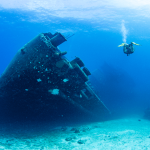
The USS Kittiwake is one of the most famous wreck dives in the Caribbean, and it’s easy to see why photographers love it. Sunk off Seven Mile Beach in 2011, the former US Navy rescue vessel has become an artificial reef covered in marine growth and surrounded by fish. Its size makes it especially photogenic. Wide-angle shots work particularly well here, whether you’re photographing the ship’s exterior structure or capturing divers swimming through the wreck.
Inside, sunlight pours through openings cut into the ship before it was sunk, creating dramatic beams of light and strong contrast against the blue water outside. It’s an ideal location for silhouette photography and interior wreck shots.
The Kittiwake is also beginner-friendly compared to many wreck dives. Clear water and relatively shallow depths make it easier for photographers to experiment with composition and lighting.
At Sunset House, we offer regular trips to the wreck through our USS Kittiwake Grand Cayman Dive, making it easy to experience one of the top Instagram spots in Grand Cayman beneath the waterline.
Find out more about exploring these first two picks by reading our blog Diving the USS Kittiwake and the Mermaid in Grand Cayman: Two Iconic Dive Sites when you have finished here.

Grand Cayman Marine Life Photography on Sunset Reef
Not every great underwater photo needs to feature a wreck or statue. Sometimes the best images come from slowing down and focusing on the smaller details of the reef itself.
Sunset Reef is excellent for marine life photography because shore diving allows you to move at your own pace. Instead of following a set boat schedule, photographers can take extra time waiting for the perfect shot.
Tropical reef fish, coral formations, and occasional sea turtles all make appearances here. Macro photographers can also find smaller reef subjects hidden among the coral and rock formations. If you’d like to learn more about the marine life you may encounter, our blog 10 Aquatic Animals You Will Encounter in Grand Cayman is the perfect companion read before your dive.
Early morning and late afternoon are often the best times to shoot, especially when the light softens and the reef becomes more active. Calm conditions and easy entry points make Sunset Reef particularly appealing for photographers trying underwater photography in Grand Cayman for the first time.
Find even more local tips and insights before you dive in our article Beginner Shore Diving in Grand Cayman: Dive from Sunset House Reef.
Grand Cayman’s West Wall
Grand Cayman’s famous wall diving creates a completely different style of underwater photography. Along the west coast, reef systems suddenly drop away into deep blue water, creating dramatic backgrounds and a real sense of scale in photographs. Coral-covered ledges sit right beside the wall, allowing photographers to combine reef detail with open ocean scenery in a single frame.
Wide-angle lenses work especially well here, particularly when photographing divers hovering along the edge of the wall. The contrast between the reef and the deep blue water beyond creates some of the most striking underwater scenes on our island.
Sunset House’s 2-Tank Morning Dive in Grand Cayman regularly visits the best west-wall dive sites, giving photographers access to some of the most scenic underwater terrain in the Caribbean.

The Iconic Seven Mile Beach in Grand Cayman
Above the water, Seven Mile Beach remains one of the classic locations for photography in Grand Cayman.
The combination of white sand and clear turquoise water creates the kind of Caribbean scenery people picture when planning a tropical vacation. During the day, the beach is ideal for bright coastal photography, while at sunset, the atmosphere completely changes.
Because Seven Mile Beach faces west, it becomes one of our island’s best sunset photography locations. As the sun drops lower, the water reflects warm colors across the shoreline, creating excellent conditions for silhouettes and wide landscape shots.
Early mornings are often quieter, if you want cleaner beach scenes without crowds. And the beach is so long and varied in its scenery that you can find an impressively diverse range of backdrops in this single location.
Discover more about this world-famous spot with our Visitor’s Guide to Grand Cayman’s Seven Mile Beach.

Smith’s Barcadere on Grand Cayman’s West Coast
Closer to Sunset House, Smith’s Barcadere — often called Smith Cove — is a favorite among locals and visitors alike. It even features in our picks for the most beautiful beaches in the Cayman Islands.
The small sandy cove is framed by rugged ironshore rock formations and palm trees, giving it a very different feel from Seven Mile Beach. The contrast between the dark shoreline and bright Caribbean water makes it one of the more visually interesting of the best photo spots in Grand Cayman.
It’s also a great location for casual travel photography. Whether you’re taking shoreline shots, snorkeling photos near the rocks, or simply capturing the scenery, Smith’s Barcadere is easy to visit during a quieter afternoon away from the busier beach areas.
Guests staying at Sunset House can also take advantage of the hotel’s 2:00 pm shuttle, which stops at Smith’s Cove before continuing into George Town.

The Top of the Camana Bay Observation Tower
For a completely different perspective of Grand Cayman, head to the Camana Bay Observation Tower, one of the top attractions in the Camana Bay complex. This outlook offers a panoramic view that includes Seven Mile Beach, George Town, and the North Sound. From the top, you can capture the contrast between the island’s urban areas, coastline, and the surrounding Caribbean Sea.
Sunset and blue hour are particularly good times to visit, when the fading light softens the landscape and the coastline begins to glow. And inside the tower, colorful mosaic artwork adds another photography subject before you even reach the viewing platform!

Tips for Photography in Grand Cayman
Conditions in Grand Cayman are ideal for both above-water and underwater photography, but a few simple habits can help you get the best results.
Saltwater and sand can be tough on equipment, so it’s worth rinsing and drying your gear carefully after beach or dive trips. Underwater photographers should also focus on good buoyancy control, both for safety and to avoid damaging coral. Check out our Guide to Correctly Weighing Yourself for Neutral Buoyancy for more on this topic.
Natural light works beautifully in Grand Cayman’s clear water, especially on shallow dives like Sunset Reef. Patience also goes a long way when photographing marine life. Often, the best shots happen when you slow down and let the reef come to you.

Start Planning Your Grand Cayman Dives with Us!
We hope you’ve enjoyed our picks for the best photography spots in Grand Cayman above and below the water. From the Mermaid statue and the USS Kittiwake to sunset scenes on Seven Mile Beach, there are opportunities for incredible photography almost everywhere you look.
And with Sunset House located close to many of these spots, it’s easy to spend your days exploring our island with a camera in hand. If you’re especially interested in discovering our underwater world, find out more about our Grand Cayman dive packages, which we can tailor to suit your needs.
Do you have any pre-booking questions for us? Please don’t hesitate to get in touch for the answers you need.